 By
Unwanted body and facial hair is a common cosmetic concern for people of different ages and backgrounds. Traditional hair removal methods such as shaving, waxing, threading, and plucking can provide temporary results, but they often require frequent maintenance. Some individuals also experience razor bumps, irritation, ingrown hairs, or discomfort from repeated grooming.
Professional laser hair removal offers an alternative for people seeking longer-lasting hair reduction. By using concentrated light energy to target pigment within hair follicles, the procedure can reduce the amount of hair that grows back over time.
Unlike shaving, which cuts hair at the skin’s surface, laser technology targets structures involved in hair production. However, results vary depending on skin tone, hair color, hormonal influences, treatment area, and individual growth patterns.
Understanding how the procedure works can help individuals determine whether it may be appropriate for their needs.
What Is Laser-Based Hair Reduction?
Laser-based hair reduction is a cosmetic procedure that uses focused light energy to affect hair follicles.
The technology is designed to target melanin, the pigment responsible for much of the color in hair.
When laser energy is absorbed by pigment within a hair, it is converted into heat. This heat can damage structures within the follicle that contribute to future hair growth.
The objective is to reduce hair growth over time.
Although some individuals experience substantial reduction, the procedure does not guarantee that every treated hair will disappear permanently.
Remaining or returning hair may become finer or less noticeable, and maintenance sessions may be appropriate.
How Does the Technology Work?
The treatment process is based on a principle known as selective photothermolysis.
This involves delivering light energy that is preferentially absorbed by a specific target.
For hair reduction, the target is pigment within the hair and follicular structures.
As the pigment absorbs energy, heat develops within the follicle.
When the treatment is appropriately selected and performed, this process can impair the follicle’s ability to produce hair.
However, successful treatment depends on delivering sufficient energy to the target while minimizing unwanted effects on surrounding skin.
That balance is one reason professional assessment and appropriate equipment settings are essential.
Understanding the Hair Growth Cycle
Hair does not grow continuously at the same rate.
Each follicle moves through different phases of activity.
Anagen Phase
The anagen phase is the active growth stage.
During this period, the hair is connected to structures within the follicle that are important for continued growth.
Laser treatment is generally most effective when hairs are in an appropriate active growth phase.
Catagen Phase
The catagen phase is a transitional stage.
The follicle begins changing as active growth slows and the hair separates from some of the structures that support it.
Telogen Phase
The telogen phase is a resting stage.
Eventually, the hair may shed as the follicle progresses toward another growth cycle.
Because neighboring follicles are not all in the same phase at once, a single session cannot reliably target every hair.
This is why treatment is generally scheduled as a series of appointments.
Why Multiple Sessions Are Necessary
One of the most important expectations to understand is that long-term hair reduction usually requires several treatments.
The number of sessions varies according to the area being treated, hair characteristics, skin type, hormonal influences, and response to the procedure.
Appointments are commonly spaced several weeks apart to address follicles as they move through different growth phases.
Some individuals notice reduced growth after early sessions, while others experience more gradual changes.
A qualified provider can recommend a schedule based on the specific treatment area and individual characteristics.
Common Areas Treated
Laser technology can be used on various parts of the body where unwanted hair develops.
Legs
The legs are a common treatment area for individuals who want to reduce frequent shaving.
Because the surface area is relatively large, appointment duration may be longer than for smaller regions.
Underarms
Underarm treatment is popular because the area is relatively compact and often requires frequent grooming.
Reducing hair growth may also help some individuals decrease irritation associated with repeated shaving.
Bikini Line
The bikini area is another common location.
Treatment boundaries should be discussed clearly before the procedure to ensure the patient’s preferences and the provider’s approach are aligned.
Face
Facial treatment may be considered for selected areas, such as the upper lip or chin.
Because facial hair growth can be influenced by hormones, results and maintenance needs may differ from those of other body areas.
Back and Chest
Larger areas such as the back and chest may be treated when suitable.
The number of sessions and overall response depend on hair density, thickness, color, and individual factors.
Understanding Diolaze XL Technology
Diolaze XL is a diode laser system designed for professional hair reduction.
Diode lasers use a specific wavelength of light to target pigment within hair follicles.
The system incorporates cooling technology intended to improve comfort and help protect the skin during treatment.
However, the suitability of any laser device depends on more than the equipment itself.
Hair color, skin tone, treatment settings, medical history, and operator experience all influence outcomes.
A professional consultation is important before determining whether a particular technology is appropriate.
Who May Be a Suitable Candidate?
Many adults with unwanted hair may be candidates for professional laser-based reduction.
Traditionally, individuals with dark hair and lighter skin have often responded well because the contrast between hair pigment and surrounding skin makes the follicle easier to target.
Modern technologies and carefully selected settings can also allow treatment of many individuals with darker skin tones.
However, greater skin pigmentation requires particular attention to device selection and technique to reduce the risk of burns or pigment changes.
People with very light blonde, gray, white, or red hair may experience less predictable results because these hairs contain less of the pigment targeted by many systems.
A consultation can help determine realistic expectations.
Why Skin Tone Matters
Melanin is present in both hair and skin.
Although the goal is to direct energy toward the follicle, surrounding skin can also absorb some laser energy.
This is especially relevant for people with more deeply pigmented skin.
Improper treatment settings may increase the risk of unwanted heating, burns, or changes in pigmentation.
Experienced providers evaluate skin characteristics and select appropriate equipment and settings.
A patient’s recent tanning history is also important because increased skin pigmentation can influence treatment safety.
Does Hair Color Affect Results?
Hair color plays an important role in the effectiveness of pigment-targeting laser technology.
Dark, coarse hair often contains more melanin and may respond better than fine, lightly pigmented hair.
Blonde, gray, white, and some red hairs may respond poorly to conventional laser systems.
Patients should discuss their natural hair color and expected response during consultation.
It is also important to understand that a reduction in hair density does not necessarily mean complete elimination of every hair.
What Happens During a Consultation?
A professional consultation helps determine whether treatment is appropriate and how it should be planned.
The provider may evaluate:
- Skin tone
- Hair color
- Hair thickness
- Treatment area
- Medical history
- Current medications
- Recent sun exposure
- Previous hair reduction procedures
- History of pigmentation changes
- Tendency toward scarring
- Treatment goals
Certain medications, medical conditions, or skin concerns may influence whether treatment should proceed or be postponed.
Patients should provide accurate information rather than withholding details they believe are unrelated.
Preparing for an Appointment
Preparation instructions can vary depending on the equipment and treatment area.
Patients are commonly advised to avoid tanning and unnecessary sun exposure before treatment.
The provider may also recommend avoiding waxing, plucking, or other methods that remove hair from the follicle for a period before the appointment.
This is because the laser needs an appropriate target within the follicle.
Shaving may be recommended before treatment, although the exact timing should follow the clinic’s instructions.
Patients should also disclose new medications, skin irritation, recent cosmetic procedures, or other relevant changes.
What to Expect During the Procedure
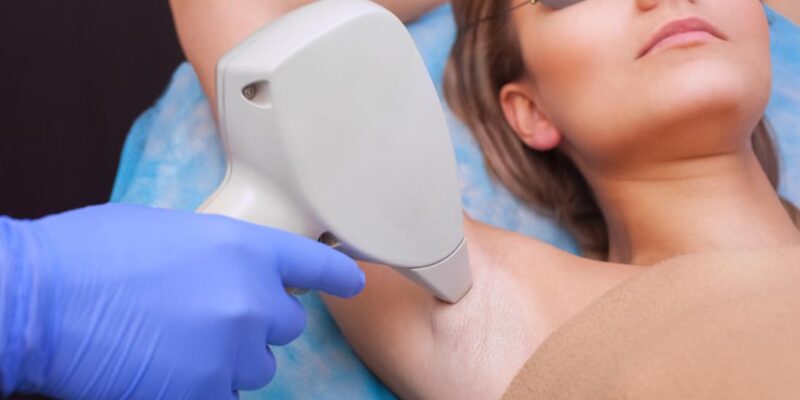
At the appointment, the treatment area is prepared according to the provider’s protocol.
Protective eyewear is essential because laser energy can injure the eyes.
The provider then moves the treatment device across the selected area, delivering controlled pulses of energy.
Patients may notice warmth, snapping sensations, or brief discomfort.
Cooling technology may help improve comfort, but sensations vary according to the treatment area, hair density, device settings, and individual sensitivity.
The appointment duration depends largely on the size of the area being treated.
Is the Procedure Painful?
Pain tolerance varies considerably.
Some patients describe the sensation as a quick snap against the skin, while others experience warmth or mild stinging.
Areas with thicker hair or greater sensitivity may feel more uncomfortable.
Modern devices may incorporate cooling systems to help manage heat at the skin’s surface.
Patients should communicate significant discomfort during treatment rather than assuming it is always normal.
The provider may need to assess the skin response or adjust the approach.
What Happens Immediately After Treatment?
Temporary redness and mild swelling around hair follicles are common responses.
The treated skin may also feel warm or sensitive for a short period.
These effects often improve relatively quickly, although individual recovery varies.
Patients should follow their provider’s aftercare instructions, which may include avoiding excessive heat, harsh skincare products, or other activities that could irritate the area.
Unusual blistering, significant pain, or other concerning reactions should be reported promptly.
Understanding Hair Shedding
A common misconception is that treated hairs should disappear immediately.
Instead, affected hairs may remain visible for a period before shedding.
During this time, it can sometimes appear as though hair is continuing to grow.
The shedding process varies by individual and treatment area.
Patients should avoid aggressively pulling at treated hairs or using irritating methods to force them out.
Following the recommended grooming and aftercare routine helps protect the skin.
Possible Side Effects and Risks
Although professional laser procedures are widely performed, they are not risk-free.
Potential side effects include:
- Temporary redness
- Swelling
- Skin sensitivity
- Burns or blistering
- Temporary darkening of the skin
- Temporary lightening of the skin
- Rare scarring
- Changes in skin texture
- Unwanted hair growth in or around treated areas in uncommon cases
The likelihood of complications depends on individual characteristics, equipment, settings, operator technique, and aftercare.
Proper patient selection and professional training are important safety considerations.
Why Sun Protection Is Important
Sun exposure can affect both treatment safety and recovery.
Tanned or recently sun-exposed skin may absorb more laser energy, potentially increasing the risk of unwanted skin reactions.
After treatment, the skin may also be more sensitive.
Patients should follow instructions regarding sunscreen, protective clothing, and sun avoidance.
In sunny environments such as Arizona, planning appointments around outdoor activities may be particularly helpful.
Consistent sun protection supports both safety and general skin health.
Can Laser Treatment Help With Ingrown Hairs?
Ingrown hairs occur when hairs curl or grow back into the skin.
They are common in areas that are frequently shaved or waxed.
By reducing the number of actively growing hairs, laser-based treatment may help some individuals experience fewer ingrown hairs over time.
However, results vary, and not every bump or irritated follicle is caused by an ingrown hair.
Persistent inflammation, infection, or unusual skin changes should be evaluated by a qualified healthcare professional.
How Does It Compare With Shaving?
Shaving removes hair at or near the skin’s surface.
It is convenient and inexpensive per session, but results are temporary.
Hair generally becomes visible again as it grows.
Laser-based reduction requires a greater initial commitment because multiple professional sessions are usually needed.
However, successful treatment can reduce the frequency of ongoing grooming.
The best choice depends on personal preferences, budget, skin sensitivity, and desired results.
How Does It Compare With Waxing?
Waxing removes hair from the root, often leaving the skin smooth for longer than shaving.
However, hair eventually regrows, and the process must be repeated.
Waxing can also cause temporary discomfort or irritation.
Laser treatment uses a different approach by targeting structures involved in hair production.
Because the methods work differently, individuals considering a series of laser sessions are often advised to stop waxing or plucking beforehand.
Are Results Permanent?
The phrase “permanent hair removal” can create unrealistic expectations.
Professional laser procedures are better understood as a method of achieving long-term hair reduction.
Some follicles may stop producing visible hair for extended periods, while others may eventually recover or produce finer hairs.
Hormonal changes and other factors can also contribute to new hair growth.
Maintenance treatments may be needed to preserve the desired result.
Patients should discuss expected outcomes rather than assuming that one series of appointments will eliminate every hair forever.
Hormonal Factors and Hair Growth
Hormones can influence the amount, location, and thickness of hair.
Changes associated with puberty, pregnancy, menopause, and certain medical conditions may affect growth patterns.
For example, some individuals develop increased facial hair related to hormonal conditions.
Laser procedures may reduce visible hair, but they do not correct an underlying hormonal cause.
When hair growth changes suddenly or is accompanied by other symptoms, medical evaluation may be appropriate.
Choosing a Qualified Provider
The quality of treatment depends on both technology and the person operating it.
A qualified provider should understand skin types, hair characteristics, device settings, contraindications, and potential complications.
Patients may want to ask about the equipment used, the provider’s training, and the clinic’s approach to evaluating different skin tones.
A professional consultation should include realistic expectations rather than promises of guaranteed permanent results.
Clear communication about risks, preparation, and aftercare is also important.
Questions to Ask Before Starting Treatment
Patients can prepare for consultation by asking:
- Am I a suitable candidate?
- Which device will be used?
- Is the technology appropriate for my skin tone?
- How many sessions might I need?
- How far apart should appointments be scheduled?
- What results are realistic for my hair color?
- What side effects should I understand?
- How should I prepare?
- What activities should I avoid afterward?
- Will maintenance sessions be necessary?
These questions can help patients understand the process before committing to a treatment plan.
Making an Informed Decision About Long-Term Hair Reduction
Professional laser-based hair reduction offers an alternative to frequent shaving, waxing, and other temporary grooming methods.
By targeting pigment within hair follicles, the technology can reduce unwanted growth and help suitable candidates achieve smoother skin with less routine maintenance.
However, successful results depend on several factors, including hair color, skin tone, hormonal influences, treatment area, equipment selection, and professional technique.
Multiple sessions are generally required because follicles move through different growth phases, and some individuals may need occasional maintenance treatments.
Technologies such as Diolaze XL provide options for professional hair reduction, but no device is ideal for every person.
A qualified provider can evaluate individual characteristics, explain expected outcomes, and recommend appropriate treatment settings.
Understanding the procedure, following preparation and aftercare instructions, and maintaining realistic expectations are essential parts of the process.
For individuals seeking a longer-term solution to unwanted hair, professional assessment is the best starting point for determining whether laser technology aligns with their skin characteristics, comfort level, and cosmetic goals.