
 By
By 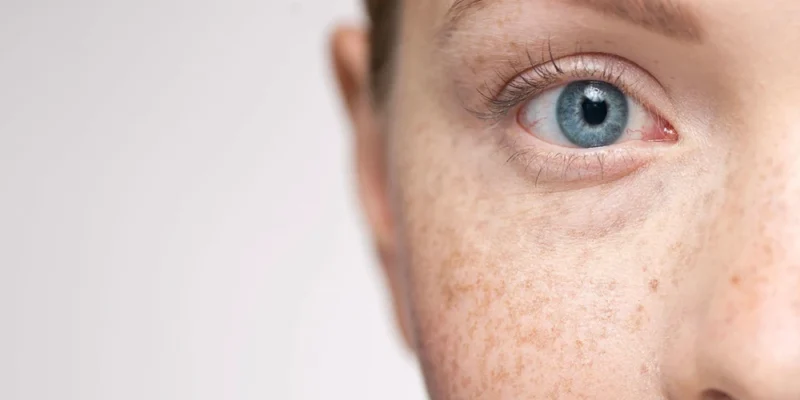
You have a brown mark on your cheek that showed up sometime in your thirties, and you have been calling it a freckle. It is not a freckle. Freckles are the light, flat dusting you get after a sunny weekend. Brown spots are the stubborn, slow-building result of decades of UV exposure, and they behave completely differently. Mixing them up means you treat the wrong thing and wonder why nothing changes.
Here is the deal: freckles and brown spots look similar at a glance, but they form through different mechanisms, fade at different speeds, and respond to different treatments. Understanding which one you have changes your whole approach to skincare, from the sunscreen you buy to whether a laser is worth the money. This guide walks you through the differences, the science behind each, and what actually works for both.
What Actually Creates a Freckle
Freckles are genetic. The MC1R gene variant, which is common in people with fair skin and red or light hair, makes your melanocytes produce more pigment when exposed to UV light. That is why freckles appear after sun exposure and fade in winter. They are your skin’s way of saying, “I see sunlight, let me make some pigment to block it.”
The key trait is that freckles are not caused by cumulative damage. They are a reaction. A kid with freckles who stays out of the sun for six months will see them fade dramatically. That same kid’s freckles will come right back after a single afternoon at the pool. Freckles are essentially a temporary tanning response, just patchier and more pronounced.
You can usually identify a freckle by these signs:
- Flat, light brown or reddish brown, never raised
- Small, usually under 5 millimeters across
- Appears on sun-exposed areas like the nose, cheeks, and shoulders
- Fades noticeably during winter months
- Multiple freckles cluster together rather than appearing as a single spot
That last point matters. Freckles arrive in groups. A single, isolated mark that has been there for years is much more likely to be a sun spot.
Sun Spots Are a Different Animal
Solar lentigines, which is the clinical name for age spots or liver spots, are not genetic. They are damage. Every minute of unprotected UV exposure over your lifetime adds to the total, and the pigment builds up in localized patches where the skin has been hit hardest. Unlike freckles, sun spots do not fade in winter. They are permanent until something removes them.
Think of it this way: freckles are your skin reacting to today’s sun. Sun spots are your skin remembering every sunburn you got in high school. The spot is a scar, not a reaction. That is why they tend to show up in your forties and fifties, long after the sun exposure that caused them. The damage is cumulative, and the visible result appears years later.
Sun spots are typically:
- Tan, brown, or dark brown with a well-defined edge
- Larger than freckles, often 1 to 3 centimeters
- Found on the face, hands, arms, and chest, the highest sun exposure zones
- Unchanged by season or reduced sun exposure
- Sometimes slightly raised or rough to the touch
The good news is that sun spots are benign. The bad news is they are a visible record of your cumulative UV history. And that record matters, because the same exposure that created the spot also increases your skin cancer risk. The EPA’s sun safety guidance reported in 2024 notes that most skin cancers are directly linked to UV exposure, which means your spots are not just cosmetic. They are a checkpoint.
How to Tell Yours Apart in 60 Seconds
Stand in front of a mirror with good lighting and ask yourself four questions.
First, when did it appear? If you have had it since childhood and it fluctuates with sun exposure, that is a freckle. If it showed up in adulthood and has stayed constant, that is a sun spot.
Second, does it change with the seasons? Track it for three months. Freckles fade in winter. Sun spots do not budget an inch.
Third, is it one spot or several? Freckles travel in packs. A single isolated mark on your cheekbone or the back of your hand is almost always a lentigo.
Fourth, what is the edge like? Freckles have soft, irregular edges that blend into surrounding skin. Sun spots have a crisper border, like someone drew a shape.
One caveat before you self-diagnose: melanoma can mimic both. If any spot is asymmetrical, has irregular borders, contains multiple colors, is larger than a pencil eraser, or is changing, skip the home test entirely and see a board-certified dermatologist. This test is for understanding, not for ruling out skin cancer.
What Actually Works for Spot Removal
Treatments split into two categories: prevention and removal. You need both.
Prevention is non-negotiable. Daily broad-spectrum sunscreen with SPF 30 or higher, reapplied every two hours, is the single most effective thing you can do. The American Academy of Dermatology reported in 2024 that daily sunscreen use significantly reduces the risk of developing new spots and slows the darkening of existing ones. Without this step, any treatment you do is temporary, because new UV exposure recreates the pigment.
For removal, the options depend on the spot type. Freckles respond beautifully to chemical exfoliants like glycolic acid and to retinoids, which speed up cell turnover and shed the pigment-laden cells. Sun spots, because they are deeper and more stubborn, typically need something stronger:
- Prescription-strength hydroquinone or topical brighteners that block melanin production
- IPL or intense pulsed light therapy, which targets pigment with broad-spectrum light
- Q-switched lasers that shatter pigment particles so your body clears them
- Chemical peels with trichloroacetic acid, which remove the outer layers of skin
- Cryotherapy, which freezes off the spot
Here is the honest part: sun spots are not removable with an over-the-counter serum. The marketers want you to believe otherwise, but a 2% hydroquinone cream from the drugstore will not touch a solar lentigo that has built up over thirty years. You need a professional to treat this, and the treatment of choice depends on your skin type, the spot’s depth, and your tolerance for downtime.
Laser treatments typically take one to three sessions, with results appearing over several weeks as the pigment breaks up and your body clears it. Chemical peels work faster but carry more redness and peeling. Neither is a one-and-done. Maintenance sunscreen use determines how long the results last.
Why You Should Not Treat Spots Yourself
I get the temptation to buy a DIY laser wand and a strong serum and handle it at home. I have seen the before-and-after photos too. But there is a real reason dermatologists push back on this: without a diagnosis, you do not know what you are treating.
A spot on your skin could be a freckle, a solar lentigo, a seborrheic keratosis, or something malignant. The treatment for each is different. An at-home acid peel that is fine for a freckle will not touch a lentigo, and if the spot is actually a melanoma, you have just spent months delaying a medical evaluation while applying acid to a growing cancer.
The other issue is that at-home treatments are dosed for safety, not efficacy. The active ingredients in professional treatments are regulated because strong acids and lasers cause burns, scarring, and paradoxical darkening when misused. I have seen people lighten their spots and darken their entire surrounding cheek because they over-applied a strong peel. The irony writes itself.
If your spots bother you, the practical path is a consultation where a professional looks at your skin, confirms the spot type, and recommends a treatment plan. That is what hyperpigmentation treatment in Georgia looks like when it is done properly: an exam first, a diagnosis second, and then a treatment matched to your actual skin.
The Bottom Line on Both
Freckles are a reaction. Sun spots are a record. Keeping them straight changes what you do next, whether that is a gentle exfoliant for your freckles or a laser appointment for your lentigines.
Start with prevention. Daily sunscreen is the cheapest, most effective treatment that exists, and it is the only one that stops new spots from forming. Then get a professional opinion on anything that has been sitting there for years. Your spots are telling a story about your sun history. It helps to read it correctly before you rewrite the ending.
Have you been calling a sun spot a freckle this whole time? Check your cheekbone in the mirror tonight and see which category it actually falls into.