


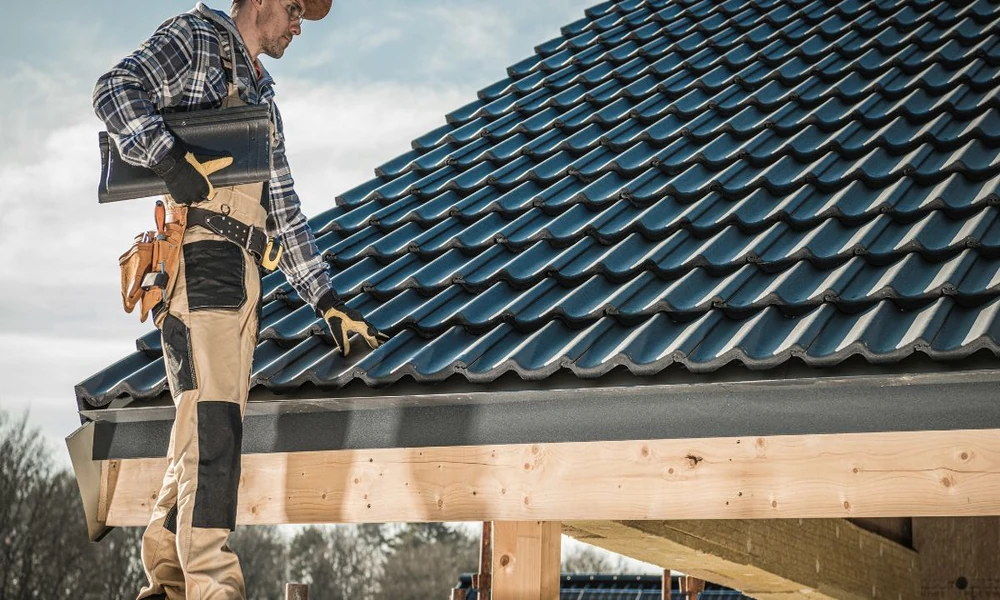
Three tabs on a Sunday night: a tarp quote, a roofer’s number you got from a neighbor, and your insurance portal. That’s usually how the decision starts. One shingle pile in the gutter, one brown ring on the ceiling, and suddenly you’re pricing something that never crossed your mind last spring.
Here’s the short version. A roof under fifteen years old with damage confined to one slope is usually a repair. A roof past twenty with widespread granule loss, soft decking, or repeated leaks is usually a replacement. The gray zone in between is where money gets wasted in both directions, and where a Tulsa residential roofing company that actually inspects your deck earns its keep. You need someone who climbs up and looks, not someone who quotes from the driveway.
This guide walks through the signals that decide it, why Tulsa’s weather matters more than most homeowners realize, and the questions that separate a good crew from a cheap bid.
What a Tulsa roof actually goes through
Tornado season gets the headlines, but hail does the slow damage. North Texas and central Oklahoma sit in one of the most hail-prone corridors in the country, and a storm that dumps golf balls on Broken Arrow can leave granules scattered across your shingles with the surface looking fine from the street. Every hailstrike knocks off the protective granule layer. Enough of them and the asphalt underneath starts baking.
Add the summer UV load and you get a compounding problem. Shingles age from heat at the same time they’re losing their shield, and the two multiply. A roof in Phoenix ages differently than one in Seattle, and a Tulsa roof ages on a curve that most national lifespan charts don’t quite capture.
According to the National Weather Service, hail causes more than a billion dollars in property damage nationwide in a typical year. Your roof is the item taking most of that hit. This is why local inspection history matters more than the brand name on the shingle wrapper.
The 4-signal check I’d run before calling anyone
Before you spend a dime, walk your own house. Four signals, in this order. This is the part most homeowners skip, and it’s the part that keeps you from getting talked into a replacement you don’t need.
- Granule sand. Run your hand along a downspout outlet or look at the splash block. Dark grit collecting there means the shingle surface is shedding. A little after a new install is normal. A cupful a month on a fifteen-year roof is not.
- Deck softness. From a ladder, press the fascia and the eave. Spongy is bad. So is a roof that gives slightly underfoot when you’re near the edge. That’s moisture in the sheathing, not just on it.
- Interior stains, and where they map. One stain under one valley is a flashing problem. Stains in three rooms along the same wall are a ventilation or deck problem wearing a leak costume.
- Hail bruising. Look for soft, dark spots on shingle tabs where the surface has been compacted. Real hail damage feels like a bruise on an apple, not a hole. If you can’t tell, that’s the one item worth a professional set of eyes.
If signals one and two are clean, you’re in repair territory. If three and four show up together, start getting replacement bids. Don’t sign the first one.
The repair-or-replace framework I’d use
Here’s a framework I use with homeowners, and I’ll give it a name so you can hold me to it. Call it the Five-Year Math. It’s a simple test: will the repairs you’re about to pay for exceed the cost of what a replacement would have cost you over the next five years, accounting for what you’ll likely spend anyway?
The grocery-shopping analogy works here. If a single repair sits at twenty percent of a replacement and you’re confident the roof has eight years left, repair. If two repairs inside three years pushes past half the replacement cost, you’re financing a doomed roof in installments. That’s the moment to stop repairing.
I’d also set a hard ceiling: never sink more than forty percent of the replacement cost into repairs on a roof past year eighteen. Past that line you’re buying time on borrowed money. The next hailstorm writes the check for you.
When repair wins
Isolated storm damage on one or two slopes, a flashing failure around a chimney, a valley that’s been patched by the previous owner and never sealed right. All repairs. So is a roof under twelve years old with solid decking, even if a few tabs are torn. Repair is often the smart play, and a contractor who pushes replacement on a twelve-year-old roof with one issue is telling you what they’re really about.
When replacement wins
Widespread granule loss across multiple slopes, sagging ridgelines, decking soft in more than one spot, or a roof that’s matching its twentieth birthday. Also: any roof you’re planning to sell within a couple of years. Buyers see a twenty-year-old roof and subtract it from your asking price. You’ll pay for it either way, and getting it done on your schedule beats getting it done on a buyer’s timeline.
What to ask before you sign anything
Five questions. The first three protect your wallet, the last two protect the roof itself.
- Who climbs the deck and photographs the sheathing? If the answer is nobody, you’re getting a surface estimate, not an inspection. Ask for photos of the deck before they price it.
- Is the underlayment spec’d on the written bid, or is it “standard”? “Standard” is a hole in the contract. Get the product named.
- Are the manufacturer certifications in writing, with the warranty term attached? Certifications earn you extended warranty terms. No paperwork, no premium.
- Is the crew on payroll or subbed out per job? Both happen. But you want to know who’s on your roof and who’s accountable if a nail ends up in your driveway.
- What’s the ventilation plan? A new roof over a poorly vented attic will age too fast. Ridge and intake spec it, and if they shrug at the question, that’s your answer.
Get all five in the written bid. A contractor who’ll answer them in good faith is worth the bid you didn’t take.
Why local matters more than a brand name
Oklahoma’s housing stock skews older than the national average. According to the U.S. Census Bureau, the state’s median home is from 1980. That means a lot of homes in this region are on their third or fourth roof, with years of layering and reflashing underneath. A good local roofer reads that history on the deck. A national outfit with a call center won’t.
And when the crew is local, the warranty conversation changes. According to the National Association of Home Builders, most builder and remodeler firms are small businesses. A local outfit with a phone number you can call in five years is worth more than a warranty booklet from a company that folded after the last storm. Ask a neighbor who’s had a roof done in the past three years. That’s your best reference, and it’s one a competitor can’t fake.
The short version
Walk your house. Run the four signals. Do the Five-Year Math. Low age and isolated damage means repair. High age and widespread damage means replacement. Get the deck photographed and the underlayment named in the bid before anyone touches your roof.
The next hailstorm is coming. The only question is whether your roof was ready for it. Has your roof seen a good inspection in the past two years? If not, that Sunday night tab might have been a call worth making sooner.