


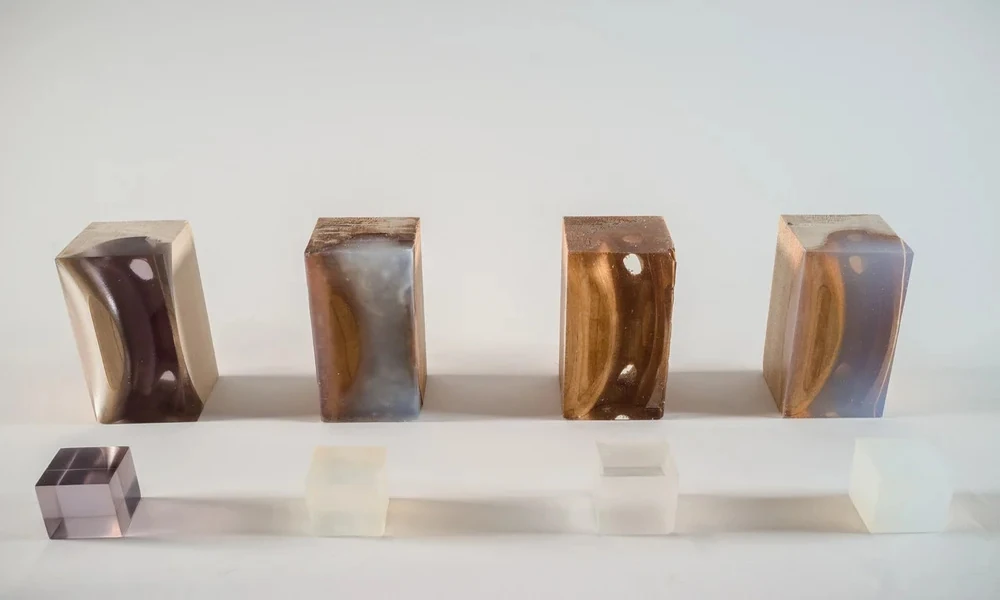
Resin is a popular material used in art, crafts, and molding because it can be used to create a wide variety of projects, from small jewelry pieces to surface coatings and fiberglass components. However, different types of resin have different properties and application methods.
Choosing the right type for a specific project is essential to achieving the desired results. This article explores three commonly used types of resin: Epoxy Resin, Polyester Resin, and UV Resin, comparing their characteristics and applications to help you choose the most suitable material for your needs.
What Is Resin? What Is It Used For?
Resin is a versatile material that hardens through a chemical reaction or exposure to light, depending on its type. Once cured, it can offer varying levels of hardness, clarity, gloss, and durability. It is commonly used in art, DIY crafts, surface coatings, casting, and fiberglass work, with each type suited to different applications. Understanding these differences helps you select the right resin for your project.
How Many Types of Resin Are There? 3 Popular Types to Know
Resin comes in many varieties, but Epoxy Resin, Polyester Resin, and UV Resin are among the most commonly used in art, crafts, and molding. Each type has different curing methods, advantages, and limitations.
1. Epoxy Resin
Epoxy Resin is commonly used for coating, art, and casting. It typically consists of resin and a hardener that must be mixed in the correct ratio to ensure proper curing. Known for its potential to produce a clear, glossy finish and bond with various materials, Epoxy Resin is suitable for making jewelry, keychains, coasters, and decorative pieces, as well as coating wood and creating artwork with embedded dried flowers.
Different formulations are designed for specific applications and casting thicknesses, so it is important to check the manufacturer’s instructions before use. Pouring resin beyond the recommended thickness may cause excessive heat buildup, leading to deformation or cracking.
2. Polyester Resin
Polyester Resin is commonly used in fiberglass applications and molded components, often combined with reinforcing materials such as glass fibers to create durable composite structures. It requires a suitable curing agent or initiator and is available in various formulations for industrial and molding applications. Common uses include fiberglass parts, body panels, and fiberglass repairs.
Since many formulations produce strong odors from volatile compounds, proper ventilation and protective equipment are essential during use. For art or decorative projects that require a clear finish, check the product specifications carefully, as Polyester Resin may not provide the same clarity or results as Epoxy Resin.
3. UV Resin
UV Resin cures quickly when exposed to UV light or a compatible light source, making it convenient for small DIY projects. It is generally ready to use without mixing a separate hardener, unlike two-part Epoxy Resin. Common applications include pendants, earrings, small keychains, and decorative pieces that require a quick curing process. However, thick pieces, opaque colors, or embedded materials may prevent light from reaching all areas, resulting in incomplete curing. Always check the manufacturer’s recommended thickness and curing instructions to ensure the best results.
What Are the Differences Between Epoxy, Polyester, and UV Resin?
Although all three types of resin can be used to create various objects, they differ in their curing methods, applications, and handling requirements. Epoxy Resin cures through a chemical reaction between its components and is suitable for art, coating, and casting, provided the ingredients are mixed accurately and allowed to cure properly.
Polyester Resin is commonly used for fiberglass work and molded components, requiring the appropriate curing system, good ventilation, and protective equipment. In contrast, UV Resin cures when exposed to suitable light, making it convenient for small projects that need quick, controlled curing, but it may be less suitable for thick pieces or areas that light cannot easily reach. When choosing a resin, consider not only its clarity and curing speed but also the project requirements, material thickness, application method, and manufacturer’s specifications.
How to Choose the Right Resin for Your Project
If you are unsure which type of resin to use, consider the following factors to help you make an informed decision.
1. Consider the Type of Project
Start by identifying what you want to create. If you plan to coat paintings, make decorative objects, or cast artistic pieces, Epoxy Resin may be worth considering. For fiberglass applications, look for Polyester Resin specifically formulated for that purpose. For small jewelry pieces, UV Resin may be suitable if the design and thickness allow sufficient light exposure.
2. Check the Size and Thickness of the Object
Thickness is an important factor when selecting resin. Some formulations are designed for thin coatings, while others can accommodate thicker casting applications. Using an unsuitable product may result in excessive heat buildup, cracking, or incomplete curing.
For UV Resin, pay particular attention to thick objects or pieces containing opaque materials, as light may not reach every area.
3. Choose Based on the Desired Finish
If you want a clear finish that showcases patterns or embedded materials, select a formulation specifically designed for clarity and the intended application. For fiberglass components, consider the resin’s molding properties and compatibility with reinforcing fibers. For small projects that require fast curing, UV Resin may be a suitable option.
Keep in mind that clarity, gloss, and durability also depend on the formulation, mixing process, curing conditions, and how the finished piece is maintained.
4. Consider the Time and Equipment Required
Each resin type involves different preparation and application methods. Epoxy Resin requires accurate mixing, Polyester Resin requires the appropriate curing system, and UV Resin requires a compatible light source.
Before starting, check the working time, initial curing time, and full curing time. This will help you plan your project and determine when the piece can be removed from its mold or handled safely.
5. Check Product Safety Requirements
Resin and its associated components may cause irritation or present inhalation hazards, depending on the formulation. Always read the product label and Safety Data Sheet (SDS) before use. Work in an appropriately ventilated area and use protective equipment as recommended by the manufacturer.
Avoid direct contact with uncured resin. You should also verify the product’s suitability before using it for items intended for direct food contact or direct contact with the body.
Choosing the right resin depends on your project’s purpose, the desired finish, curing time, and application requirements. Epoxy Resin is versatile for art and casting, Polyester Resin is commonly used for fiberglass work, and UV Resin is convenient for small decorative projects. Before starting, check the product specifications and follow the recommended application and safety instructions. For more information about resin types and their uses, explore this guide to เรซิ่น (resin) from Supersilicon to help you choose the right material for your creative projects.