


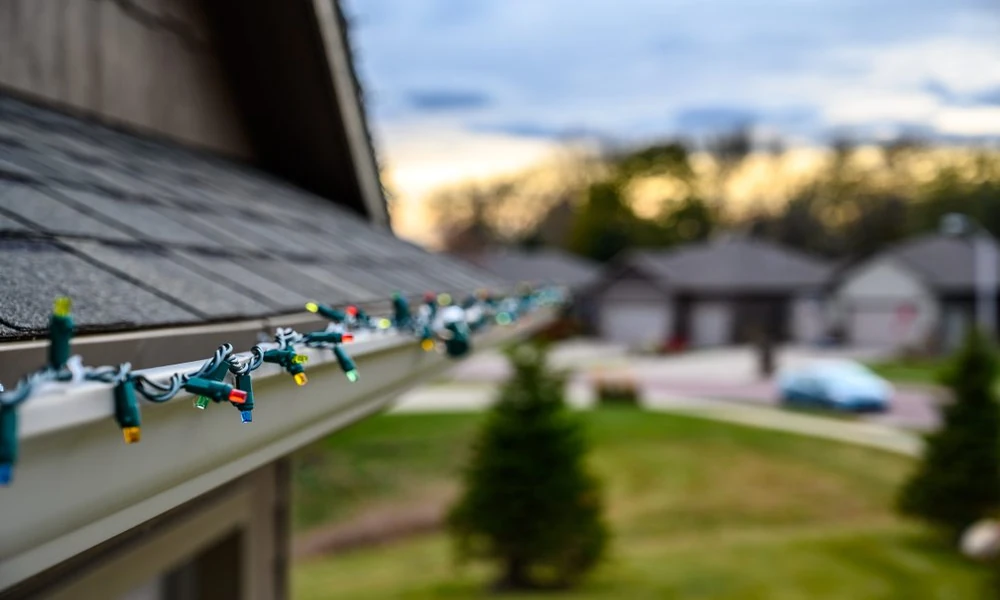
Few things dampen holiday cheer faster than flipping on the light display and plunging half the house into darkness. Strings of lights, inflatable decorations, extra cooking appliances, and space heaters all compete for power at the same time of year. With a little planning, it is possible to enjoy a bright display without overloading circuits.
Every circuit in a home is protected by an electric breaker sized to the wiring it serves, and that breaker will trip when the load climbs too high. Working with that limit, rather than against it, is the key to a safe season. Here is how to plan holiday decorations around your home’s electrical capacity.
Know Which Outlets Share a Circuit
Outlets in the same room, and sometimes in different rooms, often share a single circuit. Before decorating, map out which outlets connect to which breakers.
- Plug a lamp or radio into an outlet and turn it on.
- Switch off one breaker at a time until the device turns off.
- Label the outlet and breaker on a simple diagram.
- Repeat for exterior outlets and rooms where decorations will go.
Estimate Your Decoration Load
Every light string and inflatable lists its wattage or amperage on the packaging or tag. Add up the total for everything planned on each circuit and compare it with what the circuit can safely handle. An electrician can help confirm circuit capacity if labels or panel markings are unclear.
Choose Energy-Efficient Lighting
LED light strings draw a fraction of the power of older incandescent strings and produce far less heat. Switching to LEDs lets a home run larger displays on the same circuits and reduces fire risk from warm bulbs touching dry branches.
Spread the Load Across Circuits
- Separate indoor and outdoor displays: Avoid running everything from one exterior outlet.
- Keep high-draw appliances apart: Space heaters, roasters, and slow cookers should not share a circuit with large light displays.
- Use timers: Staggering when displays turn on can reduce peak demand.
Use Extension Cords and Power Strips Correctly
- Choose cords rated for outdoor use when decorating outside.
- Match the cord’s rating to the total load plugged into it.
- Avoid connecting multiple power strips or cords end to end.
- Keep connections off the ground and away from standing water.
- Never run cords under rugs or through doorways where they can be pinched.
Protect Outdoor Displays From Moisture
Outdoor outlets should have ground fault protection and weather-resistant covers that stay closed while cords are plugged in. Rain, snow, and melting ice can create shock hazards, so connections should be elevated and sheltered whenever possible.
Check Decorations Before Plugging In
Inspect every string for cracked sockets, frayed wires, and loose connections, and discard damaged sets rather than repairing them with tape. The CPSC safety guidance also recommends using lights tested by a recognized laboratory and turning decorations off when leaving home or going to bed.
What to Do if a Breaker Trips
- Unplug decorations first: Reduce the load before resetting the breaker.
- Reset firmly: Move the handle fully off, then back on.
- Reconnect gradually: Add decorations back a few at a time to find the limit.
- Call a professional: If it trips with little or nothing connected, have an electrician inspect the circuit.
Never replace a breaker with a larger one to stop trips. Adding outdoor outlets or new circuits for large displays should be handled by a licensed electrician following local code.
A Brighter, Safer Season
A well-planned holiday display respects the limits built into every circuit. By mapping outlets, switching to LEDs, and spreading the load, families can light up the season without interruptions or unnecessary risk.