


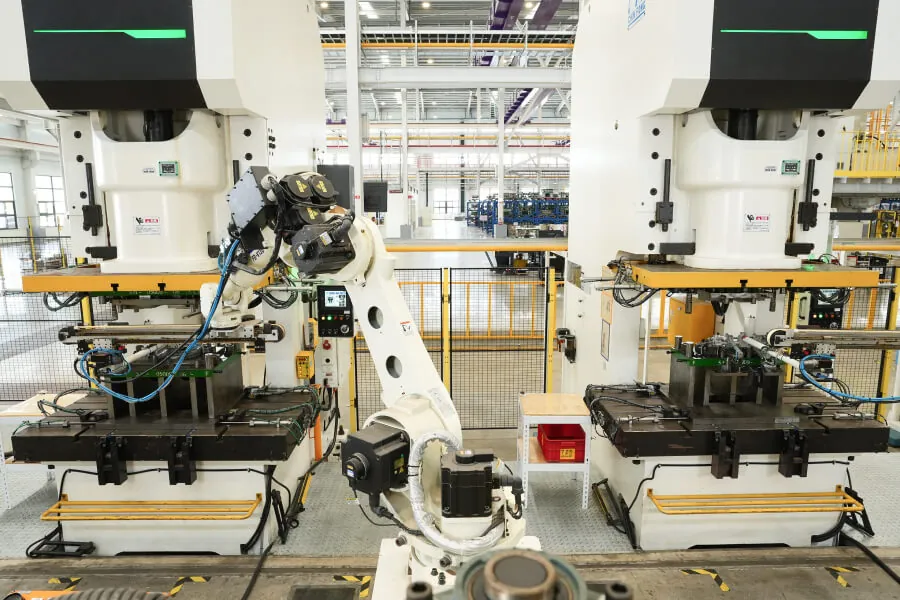
The story of the automotive part manufacturer is, at its core, the story of how human civilisations learned to coordinate complexity at scale. Just as the development of agriculture transformed how societies organised food production, the rise of modern automotive manufacturing transformed how nations organise industrial output. What began as small workshops producing individual components has evolved into a global ecosystem of astonishing precision, where a single vehicle may contain thousands of parts sourced from dozens of countries, each one produced to tolerances that would have been inconceivable a century ago.
Understanding this ecosystem requires looking beyond the factory floor. It means asking why certain regions became dominant in automotive component manufacturing, how particular capabilities cluster in specific geographies, and what structural advantages separate a high-performing supplier from one that merely survives.
The Scope of Modern Automotive Component Production
Few industries match the breadth of what automotive parts manufacturer are expected to deliver. The scope stretches from raw material processing through to finished, inspection-ready assemblies, and the range of processes involved reflects that span entirely. A capable manufacturer in this sector will typically offer:
- Metal forming and fabrication, including stamping, casting, forging, and machining of ferrous and non-ferrous materials
- Plastic injection moulding for interior trim, housings, brackets, and fluid management components
- Surface treatment and finishing, covering plating, anodising, painting, and powder coating
- Precision CNC machining for engine components, transmission parts, and structural elements requiring tight dimensional tolerances
- Assembly and sub-assembly, integrating multiple parts into tested, ready-to-install units
This is not a narrow trade. It is an industrial discipline that demands simultaneous competence in materials science, process engineering, quality management, and supply chain logistics. The manufacturers who thrive are those who have built genuine depth across all of these domains, not merely competence in one.
Why Precision Is Not Optional
In biological evolution, small genetic variations can determine survival or extinction across generations. In automotive manufacturing, small dimensional variations carry consequences that are far more immediate. A component that deviates even slightly from specification can cause assembly failures, warranty claims, or, in safety-critical applications, catastrophic outcomes.
This is why leading automotive part manufacturers invest so heavily in quality infrastructure. Modern facilities operate with coordinate measuring machines, laser scanning systems, and statistical process control protocols that monitor variation in real time. Compliance with international quality standards, including IATF 16949, is treated not as a certification exercise but as a minimum condition for doing business with major vehicle producers.
How Geography Shapes Capability
Jared Diamond’s central insight in examining human civilisations was that geography shapes destiny. This principle applies with striking clarity to the automotive manufacturing supply chain. Nations that combined strong engineering traditions, affordable skilled labour, and logistical infrastructure early in the industry’s development built advantages that compounded over decades.
Singapore offers a revealing case study. Despite its small land area, the country has carved out a sophisticated role in the regional automotive parts ecosystem, particularly in precision-engineered components, tooling, and electronics. Its geographic position at the centre of Southeast Asian trade routes, combined with a highly educated workforce and robust regulatory environment, allowed it to specialise in high-value, technically complex work rather than competing on volume alone. Singaporean manufacturers have become trusted suppliers of precision machined parts and electronic assemblies to automotive supply chains across the Asia-Pacific region.
The Technological Shift Under Way
The transition toward electric vehicles is reshaping what automotive component manufacturers must be capable of producing. The internal combustion engine, with its thousands of interdependent moving parts, required a very particular manufacturing skill set. The electric drivetrain is simpler in some respects but far more demanding in others, particularly around battery enclosures, thermal management systems, power electronics housings, and high-voltage connectors.
Manufacturers who are adapting successfully share certain characteristics:
- Early investment in new material capabilities, particularly aluminium alloys and engineering-grade polymers suited to EV applications
- Partnerships with technology providers to develop competence in electronics integration
- Flexibility in production systems, avoiding over-specialisation in components that face long-term volume declines
- Active engagement with vehicle manufacturers during the design phase, rather than waiting to be handed fixed specifications
This last point matters more than it might appear. The manufacturers who participate in design and development build relationships and institutional knowledge that are very difficult for competitors to replicate.
Selecting a Manufacturing Partner
For procurement professionals and engineering teams evaluating a potential automotive parts supplier, several factors deserve sustained attention beyond price. Process capability data, not just claimed tolerances, should be requested and reviewed. The depth of quality management systems matters as much as their existence. Capacity headroom, financial stability, and the experience level of the engineering team are all indicators of whether a supplier can perform reliably under volume pressure.
Cultural and communication factors, though less quantifiable, are equally important in long-term supply relationships. Manufacturers who communicate problems early, propose solutions proactively, and maintain transparency through production challenges are genuinely rare. When found, they are worth retaining.
An Industry Built on Accumulated Knowledge
The automotive supply chain is not simply a network of machines and materials. It is a repository of accumulated human knowledge about how to shape, join, inspect, and deliver physical objects to extraordinary standards of consistency. Every capable automotive part manufacturer embodies that knowledge in its processes, its people, and its quality systems, and that is precisely what makes the industry worth understanding in depth.