


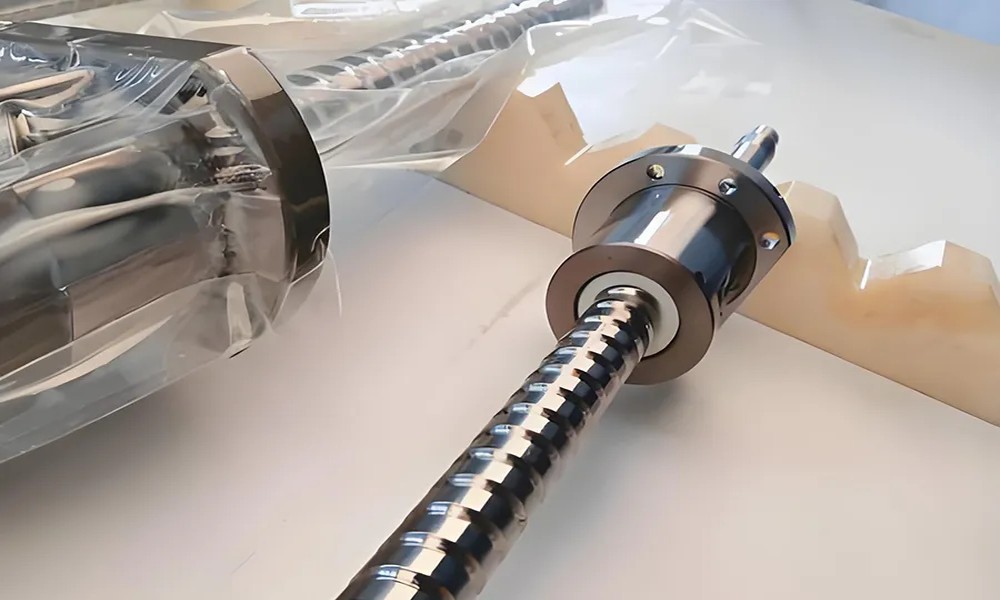
In the world of industrial automation and CNC machinery, precision is the heartbeat of productivity. Among the most critical components for achieving high-accuracy linear motion is the ball screw. Specifically, the JPF Ball Screw (บอลสกรู JPF) has become a benchmark in the Thai market for its durability and Japanese-standard engineering. However, even the highest quality hardware can underperform if the installation is flawed.
H2: Why Ball Screw Installation Requires “Extreme Precision”
A ball screw acts as the bridge that converts rotary motion from a motor into precise linear movement. If the installation is even slightly off-such as a misaligned axis or eccentricity-it results in increased Friction. This leads to excessive heat generation, loud noise, and a significantly shortened lifespan for the internal bearings.
Therefore, when installing a JPF ball screw, prioritizing “Alignment” and “Precision” is not just a recommendation; it is a technical necessity to maintain machine integrity.
8 Precision Steps for Installing JPF Ball Screws
1. Pre-Installation Inspection
Before beginning, conduct a thorough inspection of the JPF ball screw. Ensure the shaft has no bends, impact marks, or rust that could compromise movement accuracy. Check the Ball Nut for smooth rotation without snagging or unusual noise. Verify technical specifications such as Lead, Diameter, and length against the machine’s blueprints. Neglecting this step can lead to costly teardowns later.
2. Surface Preparation
The environment plays a direct role in the longevity of a JPF ball screw. The installation area must be pristine, free from dust, metal shavings, or contaminants. Even microscopic debris can destroy the internal bearing system. Wipe the mounting surfaces and rails with a clean cloth and specialized cleaner, then apply a thin coat of lubricant to prevent rust and ensure smooth assembly.
3. Mounting the Support Units
Support units hold both ends of the ball screw, categorized into the Fixed Side and the Support Side (Floated). These units must be installed on the exact same plane. Any discrepancy in height or level will cause shaft deflection, affecting both precision and lifespan. Use precision tools like a Dial Gauge or Feeler Gauge to verify that deviations remain within strict tolerances.
4. Ball Nut Assembly
The Ball Nut contains a complex internal circulation of steel balls and must be handled with extreme care. Never remove the Ball Nut from the shaft without a supporting sleeve, as the bearings may fall out, causing immediate system failure. Gently slide the nut onto the shaft, keeping it perfectly aligned. After assembly, rotate it manually to ensure there is no resistance or clicking.
5. Precision Alignment
Aligning the JPF ball screw with the Linear Guides is the most critical phase. Misalignment creates high friction and rapid wear. Use high-precision instruments such as a Dial Indicator or Laser Alignment tools to adjust the axis. The goal is to achieve the lowest possible deviation to ensure the machine operates with “Zero-Grade” smoothness.
6. Motor & Coupling Setup
The connection between the motor and the ball screw requires the correct coupling-such as a Flexible Coupling for vibration dampening or a Rigid Coupling for high-precision tasks. Focus on Center Alignment for both sides and tighten bolts according to specified Torque values. Poor centering leads to accumulated vibration, which degrades both the motor and the ball screw over time.
7. System Test Run
Once installed, perform a No-load Test to observe basic functionality, checking for noise, vibration, and fluidity. Follow this with a Load Test to evaluate performance under real working conditions. If any abnormalities, such as irregular sounds or inconsistent movement, are detected, stop the machine immediately to troubleshoot.
8. Lubrication & Maintenance Plan
Lubrication is the lifeline of a JPF ball screw. Always use the grease or oil grade recommended by the manufacturer in the correct volume. Furthermore, establish a preventive maintenance plan to check for Backlash, monitor noise levels, and replenish lubricants periodically. This ensures the system operates continuously at maximum efficiency.
How to Choose the Right Partner for “JPF Ball Screw” Installation?
Finding a vendor who can provide a “one-stop” solution is essential for minimizing downtime. When selecting a service provider in Thailand, look for these key factors:
Deep Expertise in Motion Systems: The provider must understand the mechanical physics of linear motion.
One-Stop Service Capabilities: From initial consulting and parts selection to final calibration.
Authentic, Standard-Compliant Hardware: Ensure they supply genuine JPF products to guarantee machine integrity.
Robust After-Sales Support: Rapid on-site support is invaluable for maintaining long-term productivity.
Advanced Metrology Tools: Professional installers use precision measurement tools to verify their work quantitatively.
In an industrial landscape where success is measured by precision, the correct installation of a JPF ball screw is the definitive factor in maximizing machine longevity and performance. By strictly adhering to professional alignment and maintenance protocols, you eliminate the hidden costs of unexpected downtime and ensure that your production line operates at peak efficiency.
I.N.B. Enterprise is ready to be the strategic partner that elevates your operational standards. Beyond supplying premium-grade motion control components, we offer a comprehensive One-Stop Service powered by expert engineers who understand the nuances of industrial systems. Whether you require technical consultation or high-performance hardware, we provide the precision and reliability your business needs. Trust I.N.B. Enterprise to drive your production toward a more stable and successful future.